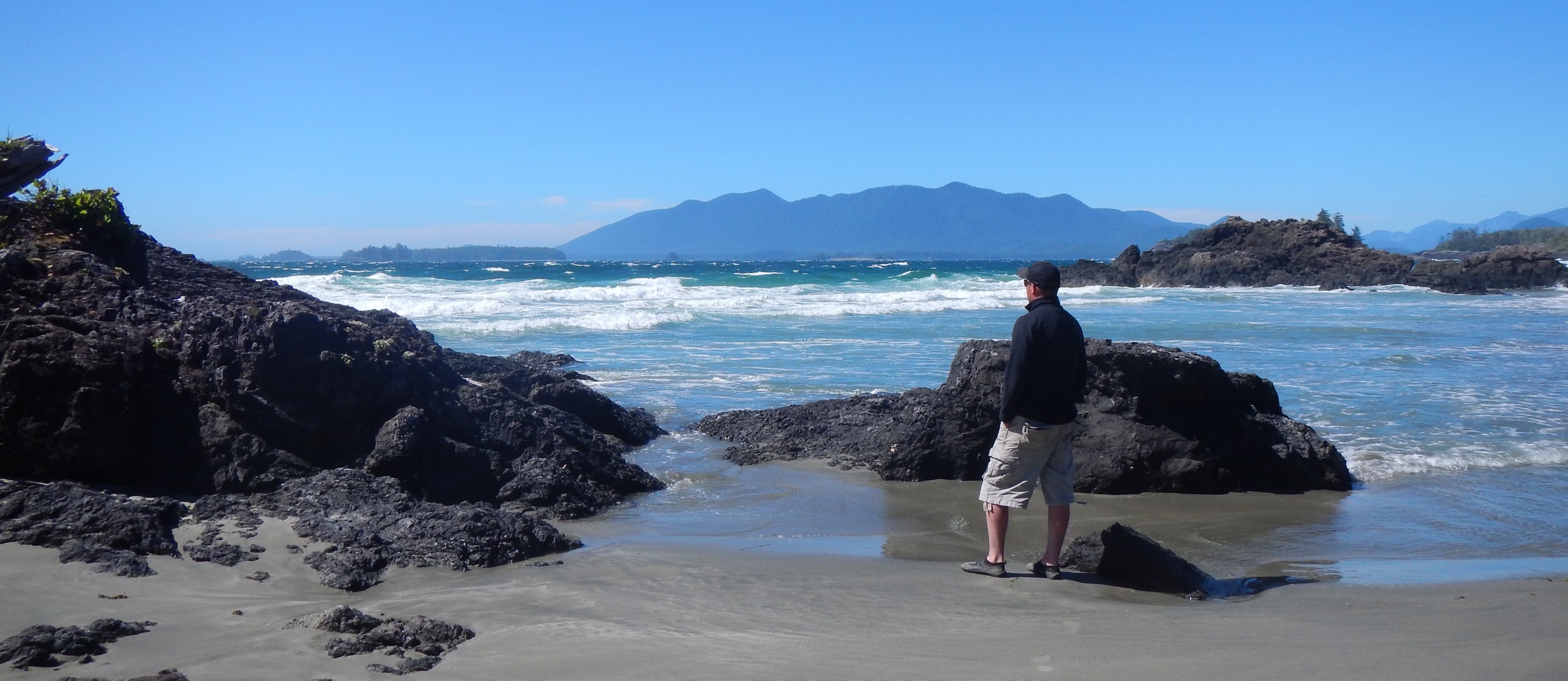
The Tablelands were definitely interesting, one of only 2 places in the World where you can walk on what once was a part of the Earths crust and mantle, 550 million years ago!


In mid-July, my friend Phil and I went on an adventure with Campbell River Whale and Bear Excursions. The highlight of the trip, at least for me was seeing the Eagles swarming around Sonora Island and catching the bottom feeding Hake which get pushed to the surface due to the tidal floods.


I’m hoping to see a lot more Moose this year during my travels to Newfoundland, especially during the rut this fall. Maybe Moose will be the feature for my 2025 Calendar?!


As it turned out, one of the Humpback Whales I photographed on August 31st while on tour with Campbell River Whale & Bear Excursions was previously undocumented according to Marine Education and Research Society.
As the first person known to document this whale, I was asked to suggest nicknames based on this Whale’s distinctive features like the square shape in the trailing edge of her tail.
I chose “Peggy” as a reference to the 4 stars that make up the great square of the Pegasus constellation.
The temporary catalogue ID for Peggy is BCXuk2023#14. Peggy will be assigned a Canadian Pacific Humpback Collaboration (CPHC) catalogue ID.

One of the best things about being a nature and wildlife photographer, is setting out with an idea and ending up with something completely different, unexpected or even better than what one had hoped for.
On August 31st, I headed out with Nick Templeman from Campbell River Whale & Bear Excursions from the Discovery Harbour Marina, leaving the dock at about 8:30am. It didn’t take us long to find Humpback Whales. In total on this day, Nick estimates that we saw approximately 20 different animals.
Just west of Mitlenatch Island, we came across two that were sleeping and made the decision to watch them in case they woke up, and woke up they sure did.
I’m excited to find out who this jumper was, he or she and his or her travelling companion or calf might actually be previously undocumented Whales in the Salish Sea!


In April of 2020, I paddled out and camped on Penn Islands Southwest – It’s all about the view. Like last time, I launched out of Coulter Bay on Cortes Island but I hoped to camp somewhere different, this time on Penn Islands North.

Due to ferry scheduling, I left at a low tide which is not ideal at Coulter Bay. It’s a great place to launch and land at a mid or high tide but lower tides require long and mucky carries. Regardless, the 8km crossing over to the Penn Islands was ideal to say the least, barely any wind and nice blue skies.


As I suspected it might be, the campsite at Penn Islands North was full with a commercial group. I grew curious about the potential of a little islet just south of it. By no means was the landing ideal but the location in my opinion was just as good, if not better and I had the entire islet to myself. Based on my experience, this location is definitely in my top 5-7 campsites ever. It required a little bit of effort, but it was worth it.


On my first night, in the stillness of the darkness, up to 3 different Humpbacks encircled my islet. One came up 50M or less from the bluff that I was camped on. It was a surreal experience which included 8 total encounters in the 3 days that I was out in the Penn’s. I even observed bubble net feeding when Raza (BCXuk2018#5) surfaced not 10M from where I was watching her on the cliff. Thank you to my friend Nick Templeman from Campbell River Whale & Bear Excursions for helping me to quickly identify Raza.

You can see the terrible scarring Raza sustained just above her dorsal fin as the result of a propeller strike in 2018. A reminder to everyone, that if you SEE A BLOW, GO SLOW. For more information, and to find out how you can support Humpback Whales, please visit Marine Education & Research Society on Facebook and on their website here: https://www.mersociety.org


On June 23rd, I sat down for an interview with reporter Alanna Kelly to discuss Humpback Whales and the pictures I captured on the 18th. You can watch the interview and read the article here.


Less than a month later, on June 18th, I got back out on the water with Wild Waterways Adventures. I’m thinking my 2024 calendar might feature Humpback Whales? These images were created in Sutil Channel, very near the Penn Islands. My friends from Marine Education and Research Society will be helping me to ID who this Humpback was.


A big thanks goes out to my friend, Reuben Buerge and Wild Waterways Adventures. I’ve spent hundreds upon hundreds of hours over the last 15 years exploring British Columbia’s coast. Only once, and at a distance have I ever seen a Humpback breach. That all changed on May 24th.


Renowned for their size and abundance, coastal Black Bears thrive in the lush coastal rainforests of Vancouver Island. Here the Black Bears have the opportunity to live a long and good life. Feeding on extremely nutritious food sources such as Salmon help these coastal giants to grow very large, often reaching 7 feet and weighing 400 plus pounds.


Recent Comments