The Great Bear Wild: Battle for One of the Last Conservation Frontiers on Planet Earth
www.desmog.ca/2014/11/11/great-bear-wild-photographer-s-battle-one-last-conservation-frontiers-planet-earth
http://www.theglobeandmail.com/news/british-columbia/the-wild-life-of-a-wildlife-photographer/article21529002/
The Great Bear Rain Forest: a photo odyssey
http://digital.timescolonist.com/epaper/viewer.aspx
Voice (and eye) of the Great Bear Rainforest
http://www.campbellrivermirror.com/lifestyles/281831081.html

The true value is painfully obvious!


September 12th, 2014 – Knight Inlet (Glendale Cove) 23 different Grizzly Bears spotted including 2 families interacting (for a total of 9 bears in one scene) and in another setting a Mom with 4 cubs which is very rare. There were so many Bears I didn’t know where to turn and point my camera next.


…which offers better protection?
I recently received advanced level accreditation from BEARSCARE – http://www.bearscare.ca/ and I was surprised and glad that there’s a strong case for non lethal protection which I will use going forward while in the back country and apply it to all forms of potential encounters with wildlife. The below excerpt is courtesy of http://www.pepperpower.com and makes for an interesting read:
At first glance, this question may seem like a no-brainer. After all, aren’t guns made to kill, while pepper spray (so-called “ bear spray,” when it comes in big cans) does not? Unlike an attack by a human assailant, who may be able to use your own weapon against you, that safety/survival argument for using pepper spray doesn’t apply to a human-bear encounter or does it? When it comes to self defense against Grizzly Bears, the answer is not as obvious as it may seem. In fact, experienced hunters are surprised to find that despite the use of firearms against a charging bear, they were attacked and badly hurt. Evidence of human-bear encounters even suggests that shooting a bear can escalate the seriousness of an attack, while encounters where firearms are not used are less likely to result in injury or death of the human or the bear. While firearms can kill a bear, can a bullet kill quickly enough and can the shooter be accurate enough to prevent a dangerous, even fatal, attack? The question is not one of marksmanship or clear thinking in the face of a growling bear, for even a skilled marksman with steady nerves may have a slim chance of deterring a bear attack with a gun. Law enforcement agents for the U.S. Fish and Wildlife Service have experience that supports this reality. Based on their investigations of human-bear encounters since 1992, persons encountering Grizzlies and defending themselves with firearms suffer injury about 50% of the time. During the same period, persons defending themselves with pepper spray escaped injury most of the time, and those that were injured experienced shorter duration attacks and less severe injuries. Canadian bear biologist Dr. Stephen Herrero reached similar conclusions regarding the effectiveness of pepper spray. Awareness of bear behavior is the key to mitigating potential danger. Detecting signs of a bear and avoiding interaction, or understanding defensive bear behaviors, like bluff charges, are the best ways of escaping injury. The Service supports the pepper spray policy of the inter agency Grizzly Bear Committee, which states that bear spray is not a substitute for following proper bear avoidance safety techniques, and that bear spray should be used as a deterrent only in an aggressive or attacking confrontation with a bear. Like seat belts, bear spray saves lives. But just as seat belts don’t make driving off a bridge safe, bear spray is not a shield against deliberately seeking out or attracting a Grizzly Bear. No deterrent is 100% effective, but compared to all others, including firearms, proper use of bear spray has proven to be the best method for fending off threatening and attacking bears, and for preventing injury to the person and animal involved.

Ian McAllister is publishing a new book, Great Bear Wild – Dispatches from a Northern Rainforest with foreword by Robert F. Kennedy Jr. It’s sure to be a delight with astounding photography and insight.

My cousin Kevin Ryer has made some pretty interesting discoveries in his pursuit of metal detecting and hidden gems in Nova Scotia, items long forgotten about or lost that hold historical significance. Below are some of his most impressive finds. I think this is a valuable and fascinating past time and I applaud Kevin for his sense of adventure and discovery.

Eighteenth century silver British knee buckle.

A Canadian quarter from 1887.
A cache of 23 Newfoundland nickels, 2 Canadian nickels and 1 Canadian dime all in the same hole and they were all sterling silver. 


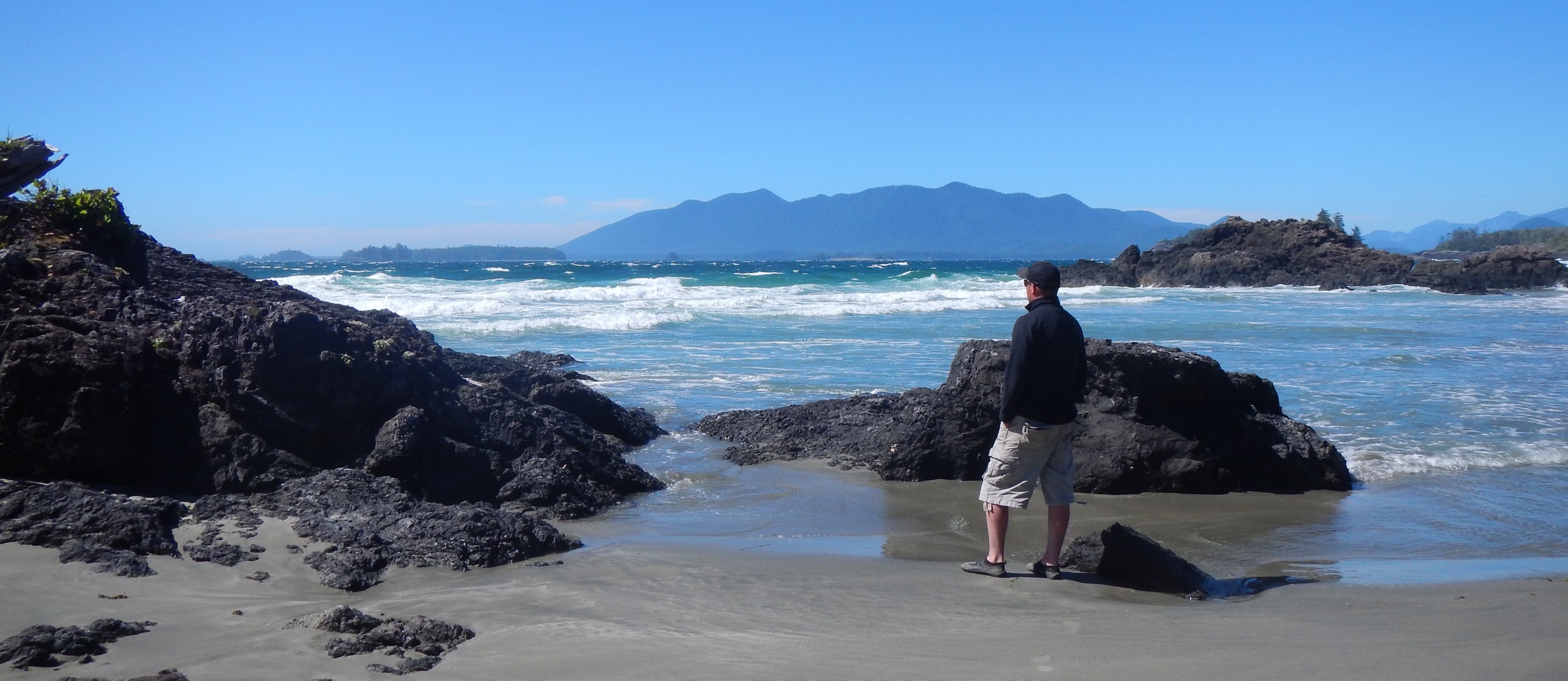
My most sincere thanks to Nova Scotia artist, painter and friend Wendy Crocker for our commission. Her chosen title “Elements” is reflected well in the synonyms of the word – aspect, detail, matter and principal all of which I pondered during this very moment in July of 2013 on Vargas Island in Clayoquot Sound. After being wind and ocean swept while kayaking I was stranded for the night on this remote island with less than adequate food, water or shelter but I had all that I needed with abundance of spirit.

An exceptional documentary showcasing the importance of the annual migration of Salmon along the Pacific Coast. This has long been considered one of the most profound migrations of any living creature on Earth and it’s been happening by the tens of millions and for thousands of years. Without the Salmon, there would be nothing.
I stumbled across this in British Columbia Magazine, definitely a place to see, visit and if you can help support the effort to protect.

The Evening Before the Launch
I spent the evening before my launch at the Dolphin Motel just outside Tofino. As always it was a pleasant stay and I enjoyed the interaction with one of the owners, “The Dolphin lady.” I’ve stayed at the Dolphin Motel several times now and I still don’t know her name. I’ve just always called her “Dolphin” and so we’ll go with that. Anyone that has stayed here, knows her. If you’re looking for a comfortable and economical stay in the Tofino area, I highly recommend the place.http://www.dolphinmotel.ca/

Day 1 – July 14th – Fog Launch, Miscalculations and Turbulent Waters
I successfully launched with all my gear stowed from the Tofino kayak ramp around 7:30 am. There was fog but not to the point that I thought it would jeopardize navigation. I was proven wrong when I became confused between the entrances to Maurus Channel and Lemmens Inlet. Maurus Channel is for the most part protected from the winds and the open ocean on the east side of Vargas Island. It was my intended route but after becoming disoriented I decided to follow the exposed west side of Vargas Island through the turbulent LaCroix Group of islands. (Yes, it’s time for a handheld GPS.)

Launching into the early morning fog from Tofino Kayak Launch.

Beached and taking a break in a protected cove on the west side of Vargas Island.
As I paddled alongside Ahous Bay I was relieved to see Blunden Island on the horizon, a previous camping place, though it was not my intention to do so this time. With the miscalculation in routing earlier, I had decided to try to make it to Dick and Jane’s beach on the northern end of Vargas Island, but I was prevented from doing so when I encountered very turbulent water and dangerous breakers just north of Ahous Bay. I decided to turn west and head the 2 km’s to Blunden Island and call it a day. The area between Vargas Island and Flores Island is a dangerous crossing even in optimal conditions, leaving a paddler exposed to the unpredictability of the open ocean.

Landing on Blunden Island, about a 20 km paddle from Tofino and relieved to be off the turbulent water.

Unfortunately I forgot the pole for the top part of my bivvy sack so I had to improvise with a trusty piece of driftwood. It worked just fine.

Blunden Island campsite.
Day 2 – July 15th – Fog and the Dangerous Crossing
After a comfortable night on Blunden Island I woke up to heavy fog, unable to see Vargas Island only 2 km’s away. I suspected treacherous conditions on the open water between Vargas Island and Flores Island. I pondered the notion of making the crossing but decided against it. (The recent training I received from Paddle Canada and Comox Valley Kayaks along with just my own experience and intuition certainly came in handy.) I was able to call Tofino Water Taxi and arrange for them to pick me up at 2:00 pm and take me to Ahousaht on the south end of Flores Island. I was disappointed that I couldn’t continue on without assistance but once I got on the taxi and made the crossing I was reassured that I made the right choice as the conditions were harsh. Even the guide from Tofino Water Taxi, Brandon, a lifelong resident of Tofino, commented that he couldn’t imagine trying to make the crossing that day in a kayak.

The potential crossing between Blunden Island and Flores Island, less than optimal given the fog, wind, breakers and swell.

Getting picked up by Tofino Water Taxi.

Departing Blunden Island with the help of Tofino Water Taxi.
Once arriving and being dropped off at Ahousaht the sun was out and there wasn’t a cloud in the sky, only a thick line of fog to the south where I had come from. I paddled the 15 km’s to Obstruction Island at the north end of Millar Channel with the wind at my back and the tide pushing me along. The campsite was rather difficult to find or perhaps I wasn’t expecting what it was, a jagged rocky outcrop but in a very tranquil and protected cove. I made camp, relaxed and rested easy until I heard what I believe was a cougar scream in one of the adjacent mountains.

Obstruction Island campsite, campsite choices are very few and there was very little firewood. I collected what I could find but for the sole purpose of warmth and not pleasure. I didn’t make a fire on the first night just in case I needed the warmth for later on.

Flat ground was hard to find but this proved to be a pretty idyllic choice. Every so often a Sea Otter would pop up to watch me.

Obstruction island campsite.
Day 3 – July 16th – Morning Fog, the Black Bear, a Broken Paddle and Shark Creek Falls
After enjoying a warm and sunny afternoon the day before I was yet again plagued by morning fog and dampness. It wouldn’t be until noon that the fog lifted. I started paddling south down Millar Channel at around 6:30 am; the waters were calm but I hugged the shoreline due to the fog. A few hours later I approached Shark Creek Falls. (maybe state the exact hours it took to reach the falls).

The 5 km paddle south down Millar Channel to the entrance of Shark Creek Falls.

Entrance to Shark Creek Falls at low tide.
Unbeknownst to me, one can only access Shark Creek Falls by kayak at high tide. There’s little information available about these waterfalls. I got stuck on the creek bed and had to carry my boat back out to the entrance. I was glad I did because a Black Bear was foraging for food on a beach nearby.

Shark Creek Falls were very difficult to compose and photograph due to their location and general contrast surrounding the area. Instead I got a trade off and a chance to photograph this Black Bear while I waited for the tide to rise.

After spending what time I did have on the high tide at the waterfalls I headed back in choppy water to my Obstruction Island campsite for dinner and a fire.
Finally, the tide was up high enough at about 1:00 pm and I could access the waterfalls.

After spending what time I did have on the high tide at the waterfalls I headed back in choppy water to my Obstruction Island campsite for dinner and a fire.

These freeze dried dinners are great, Lasagna was on the menu for night # 3.

Obstruction Island campsite and campfire, burning what little wood I had been able to find.
Day 4 – July 17th – The Paddle back to Ahousaht
I woke at about 5:30 am, burnt a little bit of the leftover firewood that I had and packed up pretty quickly and was able to launch from Obstruction Island at 6:30 am. The water was as smooth as silk and it only took me about 3 hours to paddle the 15 km on the outgoing tide down Millar Channel.

Paddling down Millar Channel. My echo would carry for at least 6 or 7 seconds as I called out to the surrounding mountains.

Landing at Ahousaht and waiting for Tofino Water Taxi to come get me.
Hot Springs Cove still eludes me but I will get to the springs one day. Allowing myself only 3.5 days to make a 60 km journey just wasn’t enough due to conditions and tides. Next time I will allow for 7 days. All in all, I did get the better part of 50 km of paddling in and thoroughly enjoyed the serenity and magic that Clayoquot Sound offers.
Recent Comments